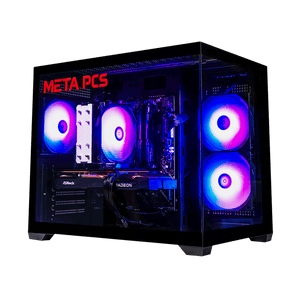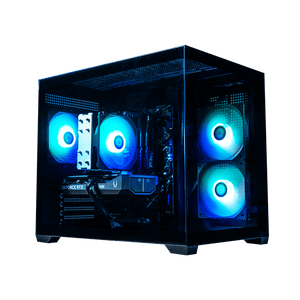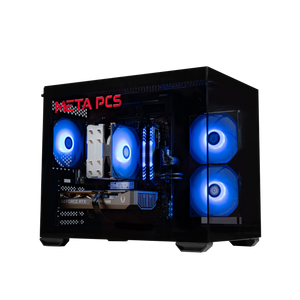





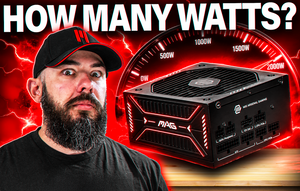
How many watts a gaming PC needs depends on its graphics card. Official numbers run from 450W for an RX 9060 XT to 1000W for an RTX 5090, with 650W for an RTX 5070 and 750W for an RTX 5070 Ti or RX 9070 XT. NVIDIA sets its figures around a 16-core Ryzen 9 9950X, leaving most builds headroom.
The video above covers a concept build from DIY Ape that pushes a whole PC's power through one rear connector rated for over 2,000 watts. It's a fun build to watch, and it's a long way from what a gaming PC pulls. The more useful 2,000W figure sits in the ATX 3.0 spec. Tom's Hardware's breakdown of Intel's ATX 3.0 standard explains that a compliant 1000W unit has to deliver 200% of its rating, so 2,000W, for 100 microseconds at a time. Modern graphics cards throw brief spikes like that at a power supply all the time, and a compliant unit is built to absorb them. So spike protection comes from compliance, and the wattage only has to match your parts.
Start With Your Graphics Card's Official Number
The graphics card is the biggest single draw in almost any gaming PC, and both NVIDIA and AMD publish a minimum power supply for every current card. That's the floor we work from. Here's what the spec pages list as of September 2026.
| Graphics card | Official board power | Minimum power supply |
|---|---|---|
| RTX 5090 | 575W | 1000W |
| RTX 5080 | 360W | 850W |
| RTX 5070 Ti | 300W | 750W |
| RX 9070 XT | 304W | 750W |
| RTX 5070 | 250W | 650W |
| RX 9070 | 220W | 650W |
| RX 9070 GRE 12GB | 220W | 650W |
| RTX 5060 Ti (8GB or 16GB) | 180W | 600W |
| RTX 5060 | 145W | 550W |
| RTX 5050 | 130W | 550W |
| RX 9060 XT 16GB | 160W | 450W |
Read NVIDIA's footnote before you compare brands. NVIDIA's RTX 5090 spec page says the minimum "is based on a PC configured with a Ryzen 9 9950X processor," and the rest of the RTX 50 pages carry the same line. AMD's RX 9070 XT page lists 750W for that card against 304W of typical board power. The two companies clearly don't calculate these the same way, which is how a 160W RX 9060 XT ends up with a 450W floor while a 145W RTX 5060 gets 550W. Compare each number only within its own brand.
If you're still choosing between the two cards in the middle of that table, our RTX 5070 vs RX 9070 XT comparison covers the performance side, and the power side is a 100W difference in minimum PSU.
Why the Vendor Minimum Already Has Headroom
Most gaming builds don't run a 16-core chip. The Ryzen 7 9800X3D carries a 120W default TDP on AMD's spec sheet, 50W under the 9950X's 170W, and the X3D chips we covered in our Ryzen 7 9850X3D review are tuned for gaming loads.
The quick method in our full guide to building a gaming PC in 2026 is CPU TDP plus graphics card power plus 100W for everything else, then 20% on top for spikes. For an RTX 5070 and a 9800X3D that's 250W plus 120W plus 100W, which is 470W, or 564W with the 20% added. NVIDIA's 650W floor clears that with room to spare. Run the same math on an RTX 5070 Ti and you land at 624W against a 750W minimum, and an RTX 5080 comes out at 696W against 850W.
The RTX 5090 is where that margin disappears. The same math gives 954W with a 9800X3D, which is uncomfortably close to NVIDIA's 1000W minimum, and swapping in a 9950X pushes it past 1,000W. Treat 1000W as the absolute floor for a 5090, and 1200W is the safer pick with a Ryzen 9.
When to Size Up a Tier
The best reason to size up is a planned graphics card upgrade. If you're buying an RTX 5070 today with an eye on a 5080-class card in a couple of years, an 850W unit now saves you replacing the power supply later, and it's how we spec the V1SHADOW50 v3 (more on that below).
Heavy CPU work is the other one. A 16-core Ryzen 9 running an all-core render, or gaming and streaming at the same time, holds its power draw much longer than a game does, and an overclock on top eats straight into your margin. Extra drives, fans and RGB rarely go past the 100W allowance, so they're not worth sizing up for on their own.
What a 2,000W Cable Tells You About Your PC
The concept in the video is derived from CRPS, the power supply standard enterprise servers use, and as the hosts point out, those units can be rated for over 3,000W. That scale makes sense in a rack full of accelerators. The fastest consumer GeForce card, the RTX 5090, is rated at 575W, and NVIDIA's whole-system minimum for it is half the connector's 2,000W rating.
The hosts also raise a fair counterpoint. Routing a PC's entire power supply through one connector creates a single point of failure for every component at once, and their question of how that single stream gets protected is still open. For now it's a concept build, and it doesn't change what you should buy this year.
What Matters More Than the Wattage Label
Once the wattage is right, a few details decide whether the unit holds up.
ATX 3.1 and a Native 12V-2x6 Cable
NVIDIA's spec pages recommend a PCIe CEM 5.1 compliant power supply, which in practice lines up with an ATX 3.1 unit. Those ship with a native 12V-2x6 cable (formerly 12VHPWR) that plugs straight into most RTX 5070-class and higher cards without the adapter that comes in the box. Skipping the adapter also removes one more connection you'd otherwise have to seat by hand.
80 Plus Gold Is the Starting Point
An 80 Plus Gold unit is the sensible floor for a gaming PC, and it's the same floor our build guide uses. The efficiency sticker on its own doesn't make a unit safe, though. Cheap power supplies paired with 300W graphics cards are among the most common warranty tickets we see, and a bargain unit with a big number on the label is a worse buy than a well-built 750W.
Only the Cables That Came in the Box
Modular cables can look interchangeable, but pinouts differ between brands and sometimes between product lines from the same brand. Mixing them can put the wrong voltage on a pin, so only use the cables that shipped with your power supply.
How We Size Power in META PCs Builds
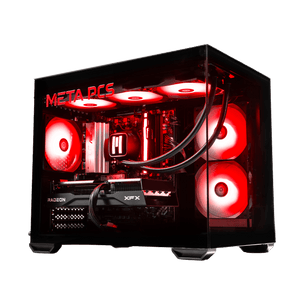
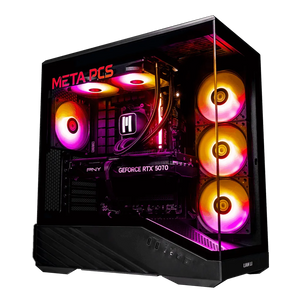
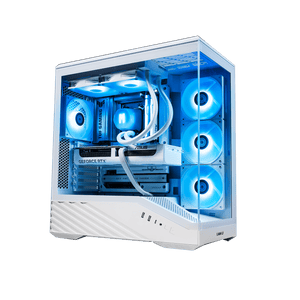
The builds below all sit above the vendor number. As of September 30, 2026, the CYCLONE runs an RTX 5050 on a META GOLD 650W, 100W over NVIDIA's figure, and the SHADEv3 pairs an RX 9060 XT 16GB with the same 650W unit, 200W over AMD's minimum recommendation. The V1SHADOW50 v3 runs an RTX 5070 on a META Gold 850W. The KILLDOZERv2 and ICEWALKERv3, both RX 9070 XT builds, and the IRONREIGN, with an RTX 5070 Ti, all get 850W units, 100W above each card's official 750W. That 850W tier also leaves room for a bigger graphics card down the line.
Every build then goes through OCCT Enterprise burn-in testing before it ships, which puts the power supply under sustained load along with the rest of the system. Parts lists change when builds get refreshed, so check the product page for the current spec. If you're comparing prebuilts from other shops, read the PSU line the same way, and our best prebuilt gaming PC guide covers the rest of what to look for.
FAQ
Is 650W enough for an RTX 5070?
650W is enough for an RTX 5070. NVIDIA lists it as the minimum system power, calculated around a 16-core Ryzen 9 9950X, so with a gaming CPU like the Ryzen 7 9800X3D a quality 650W Gold unit has real margin. Go to 850W if you plan to move up to a bigger graphics card later.
Is 750W enough for an RX 9070 XT?
A quality 750W unit meets AMD's spec for the RX 9070 XT, which lists 750W as the minimum against 304W of typical board power. The KILLDOZERv2 and ICEWALKERv3 both ship on 850W units for extra room, and that's the size to pick if you run a Ryzen 9 or plan to overclock.
What size power supply do I need for an RTX 5090?
NVIDIA's minimum for the RTX 5090 is 1000W, for a card rated at 575W. The CPU-plus-GPU math leaves that tight, so with a Ryzen 9 or any overclocking, 1200W is the safer choice. Use a native 12V-2x6 cable from an ATX 3.1 unit instead of the included adapter.
Can a power supply be too big?
An oversized unit won't hurt your PC, since components only draw what they need. The downside is cost, and most units run less efficiently at light loads. A 1600W supply in a gaming PC that pulls 500W mostly buys you a bigger bill up front.
Is 550W enough for an RTX 5060?
NVIDIA lists 550W as the minimum system power for the RTX 5060, a 145W card, and the RTX 5050 carries the same figure. With a 6- or 8-core gaming CPU, a quality 550W Gold unit covers it. Stepping up to 650W leaves room for a bigger card later.
Ready to Build
Every META PCs build on our ready-to-ship page ships tested and on lifetime US-based support, and we ship nationwide from our Arizona shop. To pick the parts yourself, the custom PC builder lets you spec the machine, power supply included, and we build and test it here. If you're building your own, run the OCCT test from our first 6 things to do after building a gaming PC guide once it's together. A stress test is where an undersized power supply tends to show itself.