




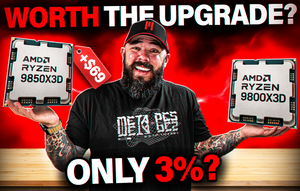
The Ryzen 7 9850X3D is the fastest gaming CPU on the market in 2026. It's also a factory-overclocked 9800X3D that costs $69 more for a 3% gaming lead, which makes the value math complicated. If you're spec'ing a no-compromise build, buy the 9850X3D and don't look back. If you want the smartest X3D value, the 9800X3D at street pricing gets you 97% of the performance for less money. And if you want to save even more, the 7800X3D still holds its own at a lower price. This piece walks through which one fits your build.
AMD launched the 9850X3D earlier this year and it landed on Tom's Hardware's CPU hierarchy at the top of the gaming charts. The reason it exists at all is Intel's Arrow Lake Refresh, which was rumored to hit 5.6 GHz boost clocks and threaten AMD's gaming crown. AMD's answer was to take the 9800X3D silicon, push the voltages higher, and label it as a new SKU with a 5.6 GHz boost of its own. The chip is real and it wins the benchmark charts. Whether it's the right pick for your build is a separate question.
The short answer
Buy the 9850X3D if the build is meant to be your absolute best rig and the extra $69 doesn't move you. Buy the 9800X3D if you want the smartest current-gen X3D value at $415 street. Buy the 7800X3D if you want to save even more money and can accept about 12% less gaming performance. All three chips sit on AM5, and any of them will destroy current games when paired with a modern GPU.
| Category | Ryzen 7 9850X3D | Ryzen 7 9800X3D | Ryzen 7 7800X3D |
|---|---|---|---|
| Street price (Aug 2026) | $484 | $415 | $330 |
| MSRP | $500 | $480 | $449 |
| 1080p gaming score | 100% | 97% | 85.6% |
| Boost clock | 5.6 GHz | 5.2 GHz | 5.0 GHz |
| Cores / Threads | 8 / 16 | 8 / 16 | 8 / 16 |
| Architecture | Zen 5 X3D | Zen 5 X3D | Zen 4 X3D |
| Socket | AM5 | AM5 | AM5 |
What the binning data reveals
Independent binning tests on retail 9850X3D samples (covered in the video above) found something worth calling out: the 9850X3D is the same physical silicon as the 9800X3D, running at higher stock voltages to hit its 5.6 GHz boost. Same 8 cores, same 16 threads, same 96MB L3 cache thanks to the second-gen 3D V-Cache stack under the compute die. Same everything, other than a factory voltage bump and a binning process that picks the chips that can hold 5.6 GHz stable.
If you already own a 9800X3D and you've been curious whether an overclock could get you close to 9850X3D territory, the answer is that a lot of 9800X3D samples can hold a manual 400 MHz overclock with PBO and a good cooler. Your mileage will vary based on the silicon lottery, and pushing voltages higher means more heat and shorter chip life if you're aggressive, so this isn't a free win. But the door is there if you want to walk through it.
None of this makes AMD a villain. Every major silicon vendor bins their chips and sells the best ones at higher prices, and the 9850X3D is just AMD picking their best 9800X3D dies and marketing them separately. What it does mean is that the 9850X3D is competing against its own younger sibling as much as it's competing against Intel, which is why the value math for most buyers points to the cheaper chip.
9850X3D vs 9800X3D by the numbers
Per Tom's Hardware's latest CPU hierarchy (updated August 26, 2026), the 9850X3D sits at 100% relative gaming performance across a 17-game 1080p suite tested with an RTX 5090. The 9800X3D lands at 97%. That's a 3% delta for a $69 price gap, which works out to roughly $23 per percentage point of extra performance. Compared to the value story most CPU upgrades deliver, that's a rough trade.
The 3% headline number understates the picture a little because 1440p and 4K gaming will narrow the gap further as the GPU becomes the bottleneck. At 1440p ultra paired with an RTX 5070 Ti or higher, you're likely looking at a 1 to 2% real-world delta in most games. In esports titles running at 300+ FPS on either chip, you probably won't feel the difference at all.
Where the 9850X3D does earn some of the premium is in the 1% lows and frame time consistency in CPU-bound games. The higher clocks help in Star Citizen, FFXIV, Cities Skylines 2, and other titles that hammer a single thread. If you play a lot of those games and you're building a rig meant to last five years, the case for the 9850X3D gets stronger. For a general gaming rotation, the 9800X3D is doing the same job for less.
Where it sits versus Intel
Intel's response to the 9850X3D is the Arrow Lake Refresh lineup, headlined by the Core Ultra 7 270K Plus. On Tom's Hardware's hierarchy, the 270K Plus lands at 77.5% relative gaming performance versus the 9850X3D's 100%. That's a 22.5% gap that any current benchmark suite confirms, and it holds up at 1440p and 4K as long as the GPU isn't the ceiling. The Core Ultra 9 285K is even further back at 71.8%. Zen 5 X3D is still the gaming architecture to beat, and the gap has not closed. If you want context on how the 9800X3D landed at launch, Tom's Hardware's original review has the full breakdown.
Intel does win the single-threaded application charts (the 270K Plus tops that rankings table), and it competes hard on multi-threaded workloads. So if your build splits time between gaming and productivity, or you're doing heavy Photoshop, video encoding, or code compilation, the Intel side of the fence is worth looking at. For pure gaming performance, AMD's X3D chips are the answer for the fifth year running.
Should you upgrade from a 9800X3D or 7800X3D?
If you already own a 9800X3D, our honest take is no. The 3% gaming uplift doesn't justify a $415 CPU swap plus reinstall time, and you can get most of that gap back with a PBO overclock and a good cooler if you're comfortable tuning. Wait for the next real generational jump (Zen 6 X3D, whenever that lands) and put the money toward a GPU upgrade instead.
If you own a 7800X3D, the picture is more interesting. The 9850X3D is about 17% faster in gaming than the 7800X3D on the hierarchy, and it's the same AM5 socket, so a drop-in swap is possible if your board's BIOS is current. That's a real upgrade you'd feel in CPU-bound titles. But the 9800X3D at $415 gives you 14% more gaming performance than the 7800X3D for less money than the 9850X3D, and it's arguably the smarter upgrade path if you want to stay in the value zone.
If you're on Zen 3 or older (5800X3D and down), or on Intel Alder Lake or older, either 9800X3D or 9850X3D is a substantial jump that involves a new motherboard and DDR5 RAM anyway. In that case, the $69 delta between the two Zen 5 X3D chips is a smaller share of the total upgrade cost, and picking the 9850X3D isn't unreasonable if you want the absolute best out of the new platform.
Who each chip is for
Buy the Ryzen 7 9850X3D if:
- You're building a no-compromise rig and the extra $69 isn't a factor
- You play a lot of CPU-bound titles (Star Citizen, FFXIV, Cities Skylines 2, MSFS 2024) where the higher clocks help 1% lows
- You want the fastest gaming CPU on the market on paper for a five-year build
- You'd rather buy binned silicon than manually overclock a 9800X3D yourself
Buy the Ryzen 7 9800X3D if:
- You want the smartest current-gen X3D value at $415 street
- 97% of the 9850X3D's gaming performance for $69 less sounds like a good trade
- You're upgrading from Zen 3 or older and want a big generational jump without paying flagship pricing
- You're pairing with an RTX 5070 Ti, 5070, 9070 XT, or lower where the GPU will be the bottleneck at 1440p anyway
Buy the Ryzen 7 7800X3D if:
- Budget is the top consideration and $330 is where you want to land
- You're pairing with a mid-tier GPU like the RX 9060 XT 16GB or RTX 5060 Ti 16GB
- 85% of the 9850X3D's gaming performance at 68% of the price is the value trade you want
- You want to leave room in the budget for 32GB DDR5 and a better cooler
Where these chips live in our lineup
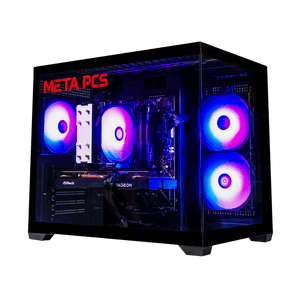
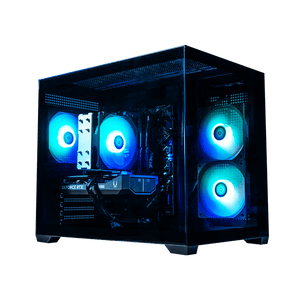
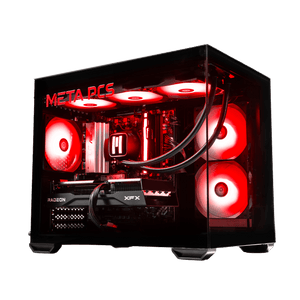
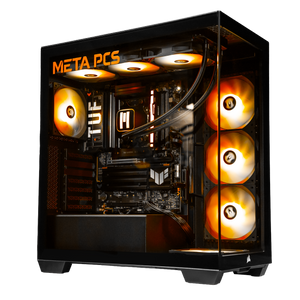
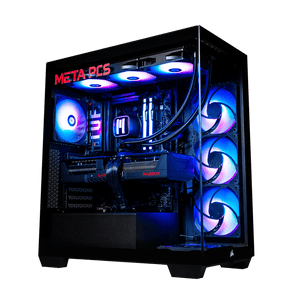
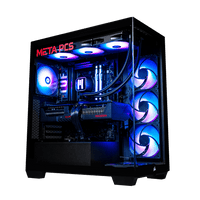
The TROOPER ships with the Ryzen 7 9850X3D paired with an RTX 5070 Ti, 32GB of Kingston Fury DDR5-6000, a 2TB Kingston NVMe, an ASUS TUF B850-PLUS WiFi board, a 360mm META AIO, and a META 850W 80+ Gold PSU inside a white Lian Li V100 case. It's our top-of-the-lineup gaming build. In our own testing, it hits 208 FPS in Cyberpunk 2077 and 233 FPS in Warzone at 1440p ultra. If you want the fastest gaming CPU on the market in a build that's ready to plug in on day one, this is the one.
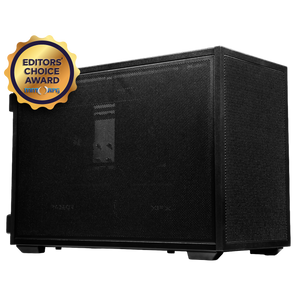
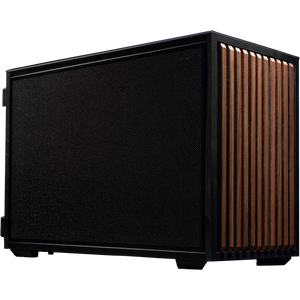
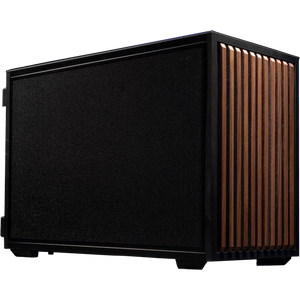
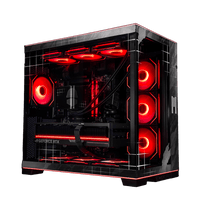
For the 9800X3D value path, the Portal ships as a barebones 9800X3D chassis with 32GB DDR5-6000 and no GPU included, pre-wired for a 12V-2x6 connector so you can bring your own RTX 5070 Ti or higher. It's the natural pick if you already own a strong GPU or you want to buy one separately and drop it in. The CPU platform, cooling, and RAM are already dialed for whatever card you bring.
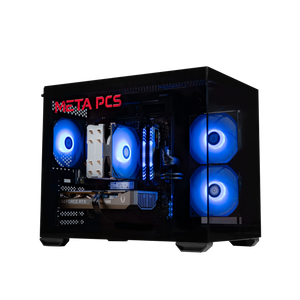
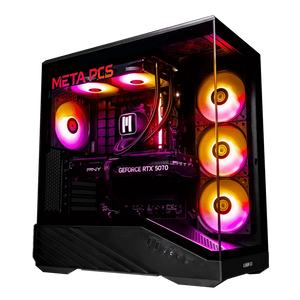
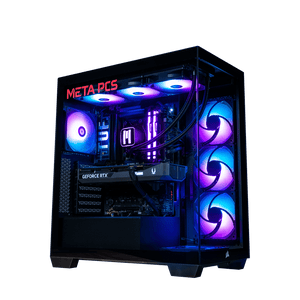
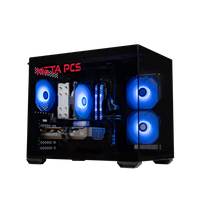
For the 7800X3D tier, we have three options depending on the look you want: the KILLDOZER v2 pairs it with an RX 9070 XT for a Steam OS build, the NIGHTWALKER v2 runs the same silicon in a black Windows chassis, and the ICEWALKER v2 gives you a full white 9070 XT build. All three are tuned for 1440p high-refresh gaming and hold up as multi-year platforms.
FAQ
Is the Ryzen 7 9850X3D the best gaming CPU in 2026?
Yes, on paper. It sits at the top of Tom's Hardware's CPU hierarchy at 100% relative gaming performance across a 17-game 1080p suite. The Ryzen 7 9800X3D is 97%, the 9950X3D is 95.7%, and Intel's fastest chip (the Core Ultra 7 270K Plus) is 77.5%. If you want the fastest gaming CPU you can buy right now, the 9850X3D is the answer.
Should I upgrade from a 9800X3D to a 9850X3D?
No. The performance uplift is roughly 3% and the cost is around $69 plus the hassle of a swap. If you want more headroom from your 9800X3D, run PBO with a good cooler and see if you can hold a 400 MHz overclock. Wait for the next real generational jump before you drop $400+ on a CPU swap.
Is the 9850X3D just a factory-overclocked 9800X3D?
Yes, that's essentially what it is. Binning tests across a batch of retail 9850X3D samples confirmed the silicon is identical to the 9800X3D. The 9850X3D is binned for higher voltages and higher stock clocks. Same 8 cores, same 16 threads, same 96MB L3 cache, same AM5 socket. This isn't inherently bad, it's how silicon binning works across every major vendor, but it does explain why the performance delta is small.
Which CPU should I pair with an RTX 5070 Ti or higher?
Either the 9800X3D or the 9850X3D pairs well with an RTX 5070 Ti, 5080, or 5090 at 1440p and 4K. The 9850X3D squeezes a few extra frames in CPU-limited scenarios, but at 4K the GPU will usually be the ceiling and the CPU delta shrinks to under 2%. If you're spec'ing a build around a 5090, the extra $69 for the 9850X3D is easier to justify because everything else in the build is already at the top of the market. Our How Much Gaming PC for 1440p in 2026 guide has the full context on pairing X3D chips with the right GPU at your target resolution.
Is the 7800X3D still worth buying in 2026?
Yes, at $330 street it's the value X3D pick. You give up about 14% gaming performance versus the 9850X3D for $154 less, which is a strong trade if you're building around a mid-tier GPU like the RX 9060 XT 16GB or RTX 5060 Ti 16GB. It sits on the same AM5 socket as the newer chips, so a future upgrade path to Zen 6 X3D (whenever that lands) is still open.
Does the 9850X3D need a new motherboard?
No. The 9850X3D uses the same AM5 socket as the 9800X3D and 7800X3D, so any current AM5 board with a BIOS update supports it. Our TROOPER ships with the ASUS TUF B850-PLUS WiFi, which is a solid mid-range board that handles the chip's power delivery well. If you're building fresh, an X870 or B850 board is the right call. Skip 16GB RAM if you're building in 2026: 32GB DDR5-6000 is the floor now, especially with everything happening in the RAM market this year.
What CPU cooler does the 9850X3D need?
The 9850X3D is rated at the same 120W TDP and 162W max power draw as the 9800X3D on AMD's spec sheet, though real-world samples pull more current under sustained load thanks to the higher stock voltages that get it to the 5.6 GHz boost. That's still comfortable territory for a strong dual-tower air cooler or any 240mm or 280mm AIO. Our TROOPER ships with a 360mm AIO for headroom and quieter operation under load, which is more cooling than the chip strictly needs but leaves room for PBO tuning. If you're building yourself, a Peerless Assassin 120 SE or a Thermalright Phantom Spirit handles the 9850X3D fine at stock. Bump up to a 280mm or 360mm AIO if you want to run PBO and squeeze extra frames.
Ready to Build?
The TROOPER is our 9850X3D build and it's the pick for the buyer who wants the fastest gaming CPU on the market paired with a top-tier GPU. The Portal is our 9800X3D barebones chassis for the builder bringing their own GPU. For the 7800X3D tier at a lower price point, the NIGHTWALKER v2 and its white and Steam OS siblings cover the range. Every META PCs system ships tested and on lifetime US-based support.
Not sure which X3D chip fits your library and budget? Reach out through the chat on metapcs.com and we'll help you match a build to what you play. We ship nationwide from our Arizona shop, and we'll walk you through the config on the phone if that's easier.