





For most people building a gaming PC in 2026, 4K isn't worth the money. The GPU tier it actually needs jumped in price this year, panel costs haven't moved, and the same money spent on a 1440p 144Hz build gets you a machine that looks fantastic and stays fast for years. Under 5% of gamers on the Steam Hardware Survey actually run 4K, and that share has barely budged despite years of "4K is the future" marketing. There is a specific buyer who should still build 4K, and we'll get to that. For everyone else, this is why we don't push it here at the shop.
The pixel math is what makes 4K so hard on a GPU
Start with what the graphics card is actually being asked to do. 4K is 3840x2160, which comes out to 8.3 million pixels per frame. 1440p is 2560x1440, or 3.7 million. That's 2.25x the load, every frame, every second. A card that pushes 120 fps at 1440p on high settings will not push 120 fps at 4K on the same settings without either a large step up in silicon or a heavy dose of upscaling.
Frame-rate targets are where this gets expensive fast. Hitting a locked 60 fps at 4K on high in current AAA titles asks for an RTX 5080 as a floor, and even then some releases need DLSS 4 Quality to hold the line. Chasing 4K at 120 or higher pushes you toward the RTX 5090, the only card on the market right now that runs 4K high-refresh comfortably native without leaning on upscaling. That's why 4K feels like a "just buy a bigger GPU" problem. It is one.
What a 4K build actually costs in 2026
The GPU is where the price shock lives. Street pricing on the RTX 5090 sits in the $4,500 to $5,000 range for mainstream AIB models per Tom's Hardware's live GPU tracker, with premium AORUS variants pushing well past $6,000. It's the only card that runs 4K high-refresh cleanly without upscaling doing the heavy lifting. The RTX 5080 has climbed into the $1,550 to $1,700 range across major trackers in August 2026 and is still rising week to week. It handles 4K/60 in most current AAA titles at high, usually with DLSS 4 in the picture. Neither is a small number, and both are pricier than they were even a few months ago because NVIDIA skipped 2026 entirely for new gaming cards. The RTX 60 series is delayed to at least 2028. What you see today is the pricing floor for the foreseeable future, and the memory-market squeeze on AMD cards has pushed Radeon pricing up alongside it.
Then the monitor. A decent 4K/144 panel with HDMI 2.1 and proper HDR runs $700 to $1,200 depending on how much OLED you want in the picture. A comparable 1440p 144Hz IPS panel with the same feature set lands closer to $250 to $400. That gap alone is real money before a single component ships.
Then the parts of the build most first-time 4K buyers forget about until they've already ordered the GPU. 32GB of DDR5 is a hard floor at this resolution, and a 32GB kit runs around $400 right now, which our RAMageddon guide digs into. Path tracing in Cyberpunk 2077 overdrive at 4K can pull 18 to 20GB of VRAM on its own, which is another reason 16GB cards start feeling cramped at this tier. The CPU matters less at 4K than it does at 1080p, since the GPU is doing so much per-frame work most modern chips can keep up. Where the CPU still earns an upgrade at this tier is high refresh 4K, DLSS 4 with Multi Frame Gen (which pushes the effective frame count the CPU has to manage), and CPU-heavy titles like MMOs. A modern 6-core handles 4K/60 fine, but a Ryzen 7 7800X3D or 9800X3D pays off for those specific cases.
The PSU has to handle a 300 to 400 watt GPU on transients without dropping the system. None of these are optional at 4K, and they add up.
Total it out and a proper 4K build lands in the $4,000 to $7,500 range all-in before you touch a keyboard or a headset, depending on whether you're building around a 5080 or a 5090. A 1440p 144Hz build that looks fantastic and holds up for years sits at $1,600 to $2,500. That's the real trade you're weighing.
When 4K actually does make sense
None of that means 4K is a bad choice for everyone. There is a specific buyer we still recommend it to, and if you fit the profile we'll build it without trying to talk you out of it.
Couch and TV gaming is the strongest case. A 55 or 65 inch OLED in the living room, played from six or eight feet away, actually shows the 4K difference over 1440p upscaled to that panel size. The GPU load is easier to swallow because the target is usually 60 to 120 fps rather than 240, and the visual payoff on a big panel is real.
Content creation is the second case. If you're editing 4K video, doing 3D work, or running a color-critical creative workflow, you already need a 4K display for the work. Gaming on the same panel comes along for the ride, and the 5080 or 5090 already sitting in the box for render performance handles games without breaking a sweat.
The last one worth mentioning is very large desk monitors. On a 32 or 34 inch panel sitting two feet from your face, the pixel-density difference between 1440p and 4K is visible. On a 27 inch or smaller display, that gap collapses fast. Anyone stepping up to a 32 inch primary monitor has a real case for 4K on the desk.
Competitive shooters and esports titles don't appear on that list because refresh rate always beats raw pixel count for those buyers. Valorant, CS2, Marvel Rivals, Warzone at high refresh, all of that stays on 1440p or 1080p.
What we build instead
For the buyer who reads all of the above and decides 1440p is the smarter landing, our full 1440p buying guide covers the spec down to the exact GPU tier per refresh rate. The short version: an RTX 5070 or RX 9070 on a 144Hz panel with 32GB of DDR5 behind it is the machine most gamers actually want, at roughly a third of the cost of a proper 4K build.
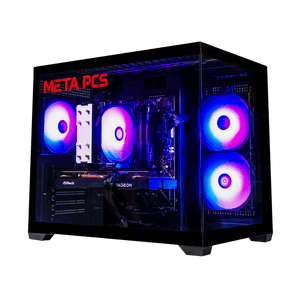
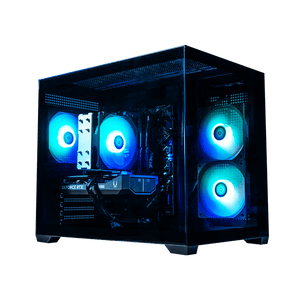
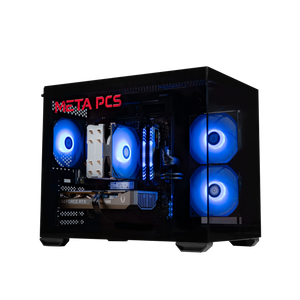
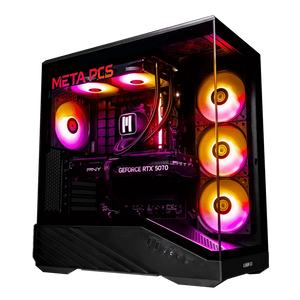
Our top GPU-included ready-to-ship build is the Nightwalker v2, which pairs a Ryzen 7 7800X3D with an RX 9070 XT and 32GB of DDR5. It's a 1440p high-refresh crusher and handles current 4K AAA titles at high settings with FSR 4 doing real work. It is not a stand-in for a 5080 at native 4K, and we won't pretend it is. It's the ceiling of what we recommend as a GPU-included build before the math stops working in the buyer's favor.
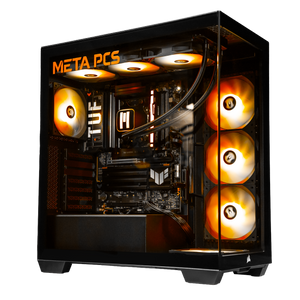
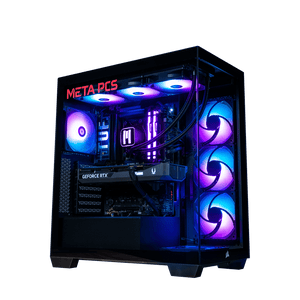
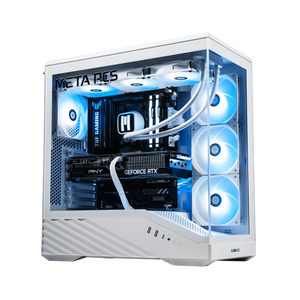
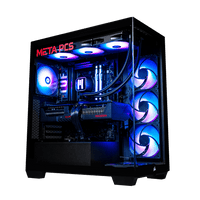
For the buyer who has already decided on a 5080 or 5090 and wants us to build the rest of the system around it, the Beacon is the answer on the Intel side. It ships pre-wired with a 12VHPWR connector on an Intel Core Ultra 7 270K Plus, 32GB of DDR5-6000 already in the box, and a META 1000W 80+ Gold PCIe 5.0 PSU rated for anything up to an RTX 5090. No GPU installed, on purpose. Bring or order the 5080 or 5090 yourself, and we handle the rest of the build and stress-test the finished machine. If you'd rather pair the same setup with an AMD X3D chip, the Portal does the same thing on a Ryzen 7 9800X3D, which most reviewers regard as the strongest gaming CPU on the market right now. Either one is how we support the buyer who legitimately needs 4K without inflating the price of a shelf build to a number we wouldn't defend. Full lineup lives on the ready-to-ship page, and if none of those exact configs fit, the custom PC builder handles anything in between.
FAQ
Is 4K gaming worth it in 2026?
For most gamers, no. The GPU tier that runs 4K well starts around $1,600 for an RTX 5080 and climbs past $4,500 for an RTX 5090, and a 1440p 144Hz build for a fraction of that cost is a better all-around experience for competitive and mixed-library players. 4K is the right pick for TV and couch gaming, large-monitor desk setups, or creators who already need a 4K display for work.
What GPU do you need for 4K gaming?
An RTX 5080 is the floor for 4K/60 on high in current AAA games, usually with DLSS 4 Quality doing some of the work. An RTX 5090 is the only card that runs 4K at high refresh rates comfortably native. AMD's RX 9070 XT can hit playable 4K in older or less demanding titles and leans on FSR 4 for current heavy AAAs.
Can you build a 4K gaming PC under $2,000?
Not really, no. The RTX 5080 alone is in the $1,550 to $1,700 range across major trackers in August 2026 and climbing, and a 4K panel with a decent refresh rate is another $700+. Add a proper CPU, 32GB of DDR5, and the rest of the build and you're above $4,000 minimum. Anyone shopping under $2,000 gets more real performance out of a 1440p build.
Is the RTX 5090 worth buying in 2026?
Only for a specific buyer. At $4,500 to $5,000 street for mainstream models per Tom's Hardware's price tracker, and higher on premium AIB variants, the 5090 is the only card that runs 4K high-refresh comfortably native and the only card that handles path tracing at 4K without heavy upscaling. That's where it earns the number. For a 1440p buyer, a 4K/60 buyer, or anyone comfortable using DLSS 4 to fill the gap, it doesn't.
Is a 4K monitor worth it if I only game sometimes?
If you already do creative work on a 4K panel or watch a lot of 4K content, the monitor is easy to justify on its own and gaming on it comes along for free. If gaming is the only reason for the panel, a 1440p 144Hz monitor is a better use of that money.
Ready to build
The straight read for 2026: 4K is a real experience for a specific buyer, and most gamers aren't that buyer. If a 1440p 144Hz build fits your library, that's where we'd point you first, and our Best Prebuilt Gaming PC guide covers what separates a good prebuilt from a bad one at any tier.
If you know you want 4K and want us to spec it, the Beacon or Portal plus a 5080 or 5090 is the build. If 1440p is the smarter fit, the Nightwalker v2, Dozer v2, or a custom spec on our builder gets you there for a fraction of the cost. Every META PCs system ships tested and on lifetime US-based support, and when yours lands here are the first six things to do before you launch a game.