





DLSS 5 runs on GeForce RTX 50 cards and nothing else right now. NVIDIA has confirmed RTX 40 support is coming with no date attached, and the RTX 30 and RTX 20 series have no announced plan at all. One shipping game supports it. That last part matters more than the support list.
NVIDIA launched DLSS 5 on September 3 alongside NBA 2K27, and the feature it introduces is called 3D-Guided Neural Rendering (NVIDIA). It's a different kind of thing from the DLSS people are used to. Super Resolution upscales, Frame Generation inserts frames, and this one changes how lighting and materials look in the frame itself. The search traffic on it has been enormous since launch, mostly from people trying to work out whether the card they own or the card they're about to buy is on the list. So here's the list, and then the part most coverage skips, which is whether any of it should change what you buy this month.
Which GPUs support DLSS 5 right now
Current support is limited to the GeForce RTX 50 desktop and laptop lineup, plus GeForce NOW Ultimate running on cloud RTX 5080 hardware (Tom's Hardware). You also need Game Ready Driver 616.64 or newer for the toggle to appear in a supported game.
| GPU generation | DLSS 5 status | What you get today |
|---|---|---|
| RTX 50 (Blackwell) | Supported now | Neural Rendering, Multi Frame Generation, Super Resolution, Ray Reconstruction, DLAA, Reflex |
| RTX 40 (Ada Lovelace) | Official support planned, no date | Frame Generation, Super Resolution, Ray Reconstruction, DLAA, Reflex |
| RTX 30 (Ampere) | Not supported, no plan announced | Super Resolution, Ray Reconstruction, DLAA, Reflex |
| RTX 20 (Turing) | Not supported, no plan announced | Super Resolution, Ray Reconstruction, DLAA, Reflex |
| GTX 16 and older | Not supported | No DLSS features |
| AMD Radeon and Intel Arc | Not applicable | FSR on Radeon, XeSS on Arc |
Every RTX 50 card is on the supported list, from the 5050 up to the 5090. Support and playability are separate questions though, and we'll get to that below.
What NVIDIA committed to for RTX 40 owners
NVIDIA initially presented DLSS 5 as Blackwell-only. That changed a day later. The company told TechPowerUp that its focus sits on tuning performance for the RTX 50 series first, with model updates due later this fall, and that once that work settles they "plan to work on expanding official support to the GeForce RTX 40 Series" (TechPowerUp).
Read the ordering there. RTX 40 support comes after the RTX 50 optimization work lands, which means it's a sequencing decision rather than a hardware wall. It also means nobody outside NVIDIA knows the date, and "later this fall" refers to the model updates rather than the Ada rollout itself. If you own a 4090 or a 4080, you'll get it. Planning a purchase around when is guesswork.
Ampere and Turing are a different story. NVIDIA hasn't announced a plan for the RTX 30 or RTX 20 series, and the tensor hardware in those generations wasn't built for a model this heavy. We wouldn't count on it.
A note on the unofficial route
Modders have patched the DLSS 5 library to run on older cards, and you'll find plenty of footage of it. We don't recommend going that way on a machine you rely on. You're swapping driver-level components outside of NVIDIA's support path, and the performance on hardware the model wasn't tuned for is rough enough that the visual upgrade stops being the point.
Why DLSS 5 costs so much to run
NVIDIA's own numbers tell the story better than any benchmark. When DLSS 5 was announced at GTC in March, it needed two RTX 5090s to run. By the September launch it ran on a single card, which NVIDIA puts at a 5X performance gain in six months (NVIDIA). A feature that needed dual flagship GPUs half a year ago is not a light workload now that it fits on one.
That's why it debuted in a basketball game. NBA 2K27 isn't pushing a GPU the way a path-traced open world does, which leaves headroom for the neural rendering pass to do its work. Visual Concepts used it for skin subsurface scattering, hair lighting, and contact shadows, and those are exactly the things you notice on a close-up of a player's face and would never notice at 90 miles an hour in a shooter.
So the honest state of DLSS 5 in September 2026 is early. The model is still being optimized, one game ships it, and NVIDIA has said more titles are coming without naming most of them.
What you keep without DLSS 5
This is the part that gets lost. DLSS 5 extends the rendering pipeline rather than replacing it, so it sits on top of the DLSS stack you already have instead of superseding it.
An RTX 40 card still runs Super Resolution, single Frame Generation, Ray Reconstruction, DLAA, and Reflex. An RTX 30 or RTX 20 card keeps everything except frame generation. None of that switches off because a newer feature exists. If you're running a 4070 today, your experience in Modern Warfare 4 or Gears of War: E-Day is identical this week to what it was last week.
Worth keeping the scale in mind too. Multi Frame Generation arrived with DLSS 4 in early 2025 and is still RTX 50 only, and the world kept turning for everyone else. DLSS 5 is the same pattern one generation later.
Whether DLSS 5 should change what you buy
Our answer at the counter has been no, not on its own. Buying a GPU for a feature that runs in one game, on a model NVIDIA is openly still tuning, is backwards. Buy the card that gives you the frame rate you want at your resolution, and treat neural rendering as something that matures underneath you.
The resolution math backs that up. Most gaming still happens at 1080p, around 52 percent by the Steam Hardware Survey, with 1440p near 20 percent and 4K under 5 percent. DLSS 5 is aimed squarely at the visual-fidelity end of that spread, and the majority of players buying a machine this year are solving for frames at 1080p or 1440p instead.
There's a fair counter-argument if you're already shopping at the top of the range. If you're choosing between a 5070 Ti and a comparable Radeon card at similar money and you care about being on the supported side of every NVIDIA feature for the next few years, the RTX 50 card is the safer long-term pick. That's a tiebreaker rather than a reason.
Where this lands in our lineup
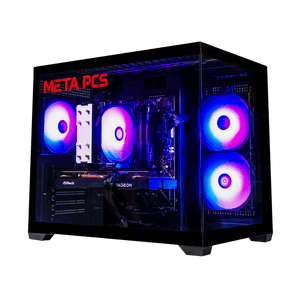
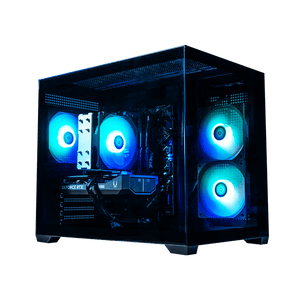
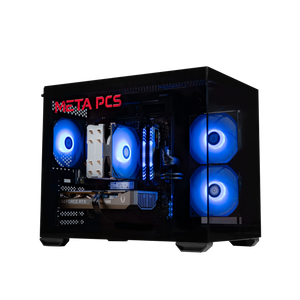
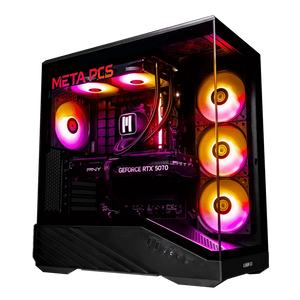
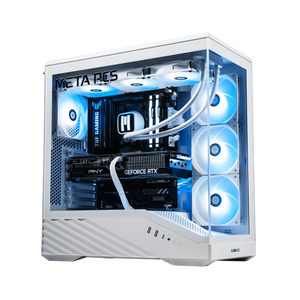
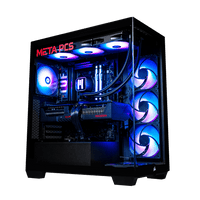
Technically every RTX 50 build we ship qualifies for DLSS 5, and that includes CYCLONE with its RTX 5050. Practically, a 5050 running the heaviest neural model NVIDIA has shipped is not the experience anyone is hoping for. Treat that one as a 1080p esports and current-gen-titles machine and leave neural rendering off.
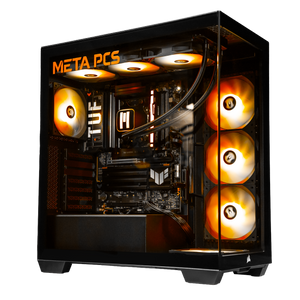
If DLSS 5 is a real factor for you, V1SHADOW50 v3 with an RTX 5070 is where the conversation starts, and IRONREIGN with a Ryzen 7 7800X3D, an RTX 5070 Ti, and 32GB of DDR5-6000 is where it stops being a compromise. Both sit on the supported side of every current NVIDIA feature.
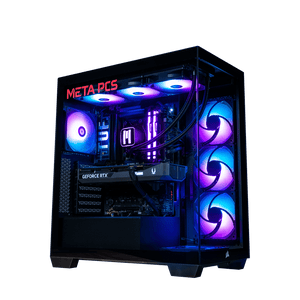
If it isn't a factor, SHADEv3 pairs a Ryzen 5 9600X with an RX 9060 XT 16GB and gives you more VRAM per dollar, which does more for you in a modern Unreal Engine 5 title than a feature you'd toggle on in one basketball game. EMBER Ti splits the difference with an RTX 5060 Ti 8GB if you want the NVIDIA stack at the entry end. The rest of the lineup sits on our ready-to-ship page.
Whichever way you go, memory is the line item we'd protect first at current prices, and our RAM sizing guide covers where the real cutoffs sit. The custom PC builder lets you move a build to 32GB before it ships.
FAQ
Does the RTX 4090 support DLSS 5?
Not yet. DLSS 5 launched exclusive to the RTX 50 series, and NVIDIA has since confirmed it plans to bring official support to the RTX 40 series after it finishes optimizing performance on RTX 50 hardware. No date has been given. Every other DLSS feature the 4090 already had continues to work.
What is DLSS 5 and how is it different from DLSS 4?
DLSS 5 introduces 3D-Guided Neural Rendering, which uses a game's geometry, textures, lighting, and motion data to alter how materials and lighting appear in the final frame. DLSS 4 focused on upscaling and frame generation, so DLSS 5 is solving a different problem. It builds on top of the existing DLSS features rather than replacing them.
What games support DLSS 5?
NBA 2K27 is the first and, at the time of writing, the only shipping title with DLSS 5. NVIDIA has said more games are coming. Anyone claiming a long support list right now is guessing.
Do I need a new driver for DLSS 5?
Yes. GeForce Game Ready Driver 616.64 WHQL or newer enables the DLSS Neural Rendering toggle in supported games. Driver updates run through the NVIDIA App, which replaced GeForce Experience, and our first six things to do after building a gaming PC guide covers that setup pass.
Is it worth upgrading to an RTX 50 card just for DLSS 5?
We'd say no if that's the only reason. One game supports it, NVIDIA is still tuning the model, and GPU prices in 2026 are what they are, which our RAMageddon buying guide gets into. Pick the card that hits your target frame rate at your resolution, and take neural rendering as a bonus if it comes with the card you were buying anyway.
Ready to build
DLSS 5 is real and it looks the part, and it's also one feature in one game on a model that's still being optimized. RTX 50 owners have it today, RTX 40 owners will get it eventually, and everyone else keeps the DLSS stack they already had. None of that is a reason to rush a purchase.
If you want a machine that's on the right side of NVIDIA's feature list for the next few years, every META PCs build on our ready-to-ship page ships tested and on lifetime US-based support, and we ship nationwide from our Arizona shop. The custom PC builder lets you pick the exact GPU that fits how you play. If you want to see how we spec a machine before you buy one, our prebuilt gaming PC breakdown walks through the thinking.