




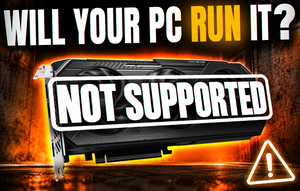
Gears of War: E-Day hits PC on October 6, 2026, and the full spec sheet is live. One line matters more than the rest: a hardware ray tracing capable GPU is required at minimum, so cards without RT hardware don't run the game at all. Past that, plan on 16GB of RAM and 115GB of SSD space.
Most games treat ray tracing as a toggle you flip off when your card struggles. E-Day doesn't work that way. The Coalition built it in Unreal Engine 5.8 with Lumen handling global illumination and MegaLights handling light sources, and the published minimum spec makes no allowance for hardware without ray tracing. A GTX 1080 Ti or an RX 5700 XT can still push through a lot of 2025 games at 1080p high, and neither one gets past the launcher here. We've had customers asking all month whether their current card is fine for launch night, and for a lot of them the answer has been no. Same drill as our Modern Warfare 4 requirements breakdown, except this time the numbers are official.
Gears of War: E-Day PC requirements
These come straight off the Steam listing, published when the game went gold on September 17.
| Component | Minimum | Recommended |
|---|---|---|
| OS | Windows 10 64-bit (22H2, build 19045.7291) | Windows 11 64-bit (25H2) or newer |
| CPU | Ryzen 5 2600X / Core i7-6850K / Core i5-10400 | Ryzen 5 5600 / Core i5-11600K |
| RAM | 12GB | 16GB |
| GPU | Hardware ray tracing capable GPU required. RTX 5050 / RTX 2060 / RX 6600 / RX 9060 | RTX 5060 / RTX 3060 Ti / RX 6700 XT / RX 9060 XT |
| DirectX | Version 12 | Version 12 |
| Storage | 115GB available, SSD required | 115GB available, SSD required |
| Network | Broadband internet connection | Broadband internet connection |
Full sheet lives on the Steam store page. Advance Access for Premium Edition buyers opens October 1, five days ahead of the October 6 launch, and pre-load starts September 29. If you want to test a rig before you commit to parts, those five days are your window.
The ray tracing requirement is the part that catches people out
The minimum GPU list reads strangely because it mixes generations. An RTX 2060 from 2019 sits next to an RTX 5050 from last year. What ties them together is RT hardware, and the listing spells that out before it names a single card.
So the real cutoff lands at the RTX 20 series on the NVIDIA side and RDNA 2 on the AMD side, which is the RX 6000 generation. The GTX 16 series doesn't sneak in on a technicality either, since those cards ship without RT cores at all despite sharing an architecture generation with the RTX 20 series. Anything older is out whatever its raster numbers look like. A 1080 Ti will still beat an RX 6600 in plenty of older titles and it still won't launch this one. If that's the card you're on, budget for a replacement before October 6, and our free FPS boost settings guide will squeeze what's left out of it in the meantime.
The recommended list is wider than it looks
RTX 5060, RTX 3060 Ti, RX 6700 XT, and RX 9060 XT all sit at the recommended tier, and those cards are not equal. The 3060 Ti and 6700 XT are older parts landing in similar territory at 1080p, while the 5060 brings DLSS 4.5 and a newer RT block to the same slot. Read that whole list as a 1080p target and nothing more. The Steam page advertises 4K at up to 60 FPS, and none of those cards are the reason it does.
12GB minimum, 16GB recommended, and what that misses
The 12GB minimum is an odd figure and it tells you something: the game alone wants more than the 8GB era allowed. Recommended is 16GB, and that number assumes a clean Windows install sitting behind it.
Windows 11 idles at 4 to 5GB before you open anything. Discord adds 500MB to 1GB. A browser with a handful of tabs adds another 2 to 3GB. Run OBS on top of that to capture your Horde Siege runs and 16GB gets tight in a hurry, because UE5 titles like Black Myth: Wukong and Stalker 2 already pull 16GB or more for the game by itself at higher settings. 32GB is where we'd land for anyone doing more than playing. That's a harder recommendation to make this year than it was last year given where memory pricing went, and our RAM sizing guide walks through where the real cutoffs sit.
Storage: 115GB on an SSD
Steam lists 115GB of available space and flags an SSD as required, which rules out running E-Day off a mechanical drive entirely. Budget more than 115GB. Day-one patches and post-launch Horde Siege content push that number up, and an SSD running near full slows down anyway.
For scale, a 1TB NVMe holds E-Day plus three or four other modern installs and not much else. 2TB is what we spec on most builds now, and this is the exact reason why.
DLSS 4.5, RTX Mega Geometry, and the NVIDIA side
E-Day is the first game shipping with NVIDIA's RTX Mega Geometry, which lets the ray tracing pass work against full-detail Nanite geometry instead of a simplified stand-in mesh (VideoCardz). Shadows and reflections on rubble, foliage, and vehicles end up matching what you're looking at. NVIDIA says it works across the GeForce RTX range, though how much you can switch on still depends on the card.
GeForce RTX owners also get DLSS 4.5 Super Resolution, Dynamic Multi Frame Generation, and Reflex through a direct partnership between NVIDIA and The Coalition (NVIDIA). Multi Frame Generation is RTX 50 series only, so a 5060 has frame generation options a 3060 Ti doesn't, which is a fair reason to weight the newer card if you're choosing between them. AMD cards run FSR "Redstone" instead. The game also ships with a built-in benchmark mode, so you can test settings on your own hardware rather than guessing from a YouTube comparison.
Worth knowing for later: Microsoft plans to fold the Mega Geometry approach into DXR 2.0, so this stops being a one-game feature at some point.
What we'd build for Gears of War: E-Day
E-Day is a 60 FPS campaign shooter first and a Versus game second, so what you buy depends on which half you care about.
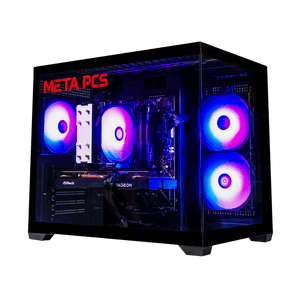
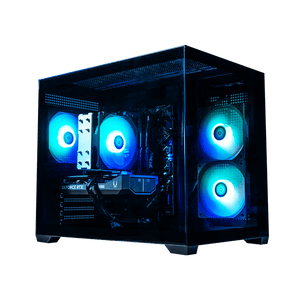
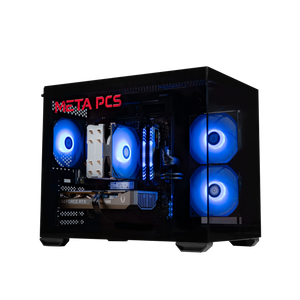
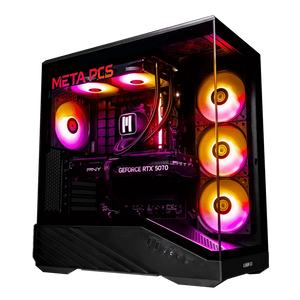
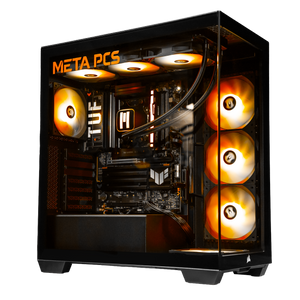
For 1080p at the recommended tier, SHADEv3 is where we'd point most people. Ryzen 5 9600X with an RX 9060 XT 16GB, and that 9060 XT is named directly on the recommended sheet. The 16GB of VRAM matters more than the model name, because UE5 with Lumen and MegaLights active is not a light VRAM load.
If you want the NVIDIA feature stack instead, EMBER Ti pairs an RTX 5060 Ti 8GB with a Ryzen 5 5500 and clears the recommended GPU tier. The 8GB of VRAM is the limit on that one, so treat it as a 1080p machine and leave it there.
CYCLONE is the entry pick, and it's interesting here because the RTX 5050 inside it is the exact card printed on the minimum spec sheet. It runs E-Day, though not with the ray tracing settings pushed up, and at that price that's a reasonable trade.
Stepping up, V1SHADOW50 v3 puts an RTX 5070 behind a Ryzen 5 9600X, which is where 1440p with DLSS 4.5 and the ray tracing features switched on starts holding up. IRONREIGN goes further with a Ryzen 7 7800X3D, an RTX 5070 Ti, and 32GB of DDR5-6000 already in place. That's the one we'd hand someone who wants 1440p with ray tracing on and doesn't want to revisit the decision. The whole lineup sits on our ready-to-ship page.
Our entry and mid-tier builds ship with 16GB of memory as standard, which matches the recommended spec for the game by itself. If you stream, record, or keep a second monitor full of tabs, bump it to 32GB in the custom PC builder before it ships. Cheaper at order time than buying a kit separately at current memory prices, which our RAMageddon buying guide gets into.
Everything goes out OCCT Enterprise burn-in tested before it leaves the shop. If you're setting up a new machine from scratch, our first six things to do after building a gaming PC guide covers the BIOS and driver pass that saves you the launch-day scramble.
FAQ
Can I run Gears of War: E-Day without a ray tracing GPU?
No. The minimum spec calls for a hardware ray tracing capable GPU, which puts the floor at the RTX 20 series for NVIDIA and RDNA 2 for AMD. GTX cards, including the GTX 16 series, and RX 5000 series cards ship without the RT cores the sheet asks for, so raster performance doesn't get them over the line.
How much RAM does Gears of War: E-Day need?
12GB is the published minimum and 16GB is recommended. The 16GB figure covers the game with Windows behind it and not much else. Discord, a browser, and OBS together can eat 4 to 6GB before the game opens, so 32GB is the safer number if you run anything alongside it.
Does Gears of War: E-Day support DLSS?
Yes. GeForce RTX cards get DLSS 4.5 Super Resolution, Dynamic Multi Frame Generation, and NVIDIA Reflex, and E-Day is the first title shipping with RTX Mega Geometry for higher-detail ray traced shadows and reflections. Multi Frame Generation is limited to RTX 50 series cards. AMD cards use FSR "Redstone" instead.
How much storage does Gears of War: E-Day need?
115GB of available space, and it has to be on an SSD. Leave headroom past that for day-one patches and later content drops. A 1TB drive works if E-Day is one of only a few games installed, and 2TB is the more comfortable size.
When does Gears of War: E-Day launch on PC?
October 6, 2026, with Advance Access for Premium Edition buyers starting October 1. Pre-load opens September 29, so you can have the 115GB sitting on the drive before the servers open.
Ready to build
The short read on E-Day: ray tracing hardware is the gate and 16GB of RAM is the working floor. The part people forget is storage, and 115GB free on a solid-state drive isn't optional here. Sort those out and you're set for October 6.
If you'd rather not source parts in this market, our ready-to-ship builds go out tested and on lifetime US-based support, and we ship nationwide from our Arizona shop. The custom PC builder lets you dial in the exact GPU and memory your setup needs. If you want to see how we spec a machine before you buy one, our prebuilt gaming PC breakdown walks through the thinking.