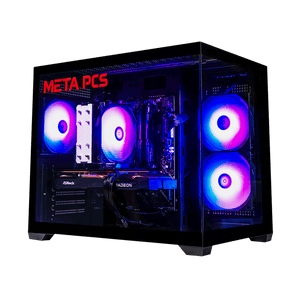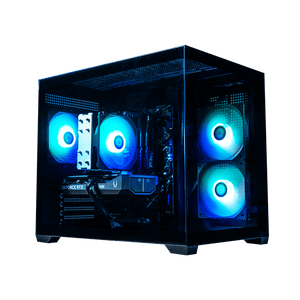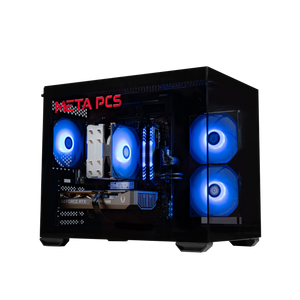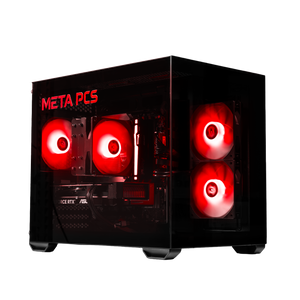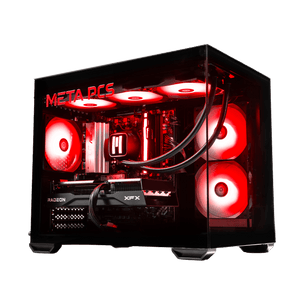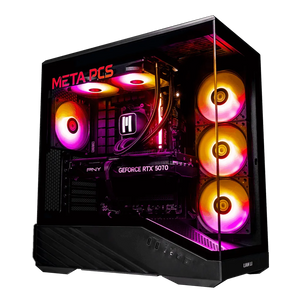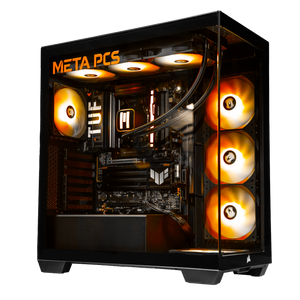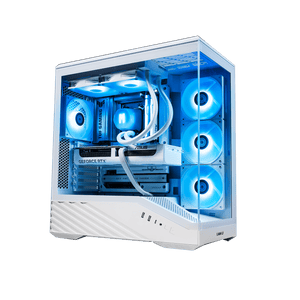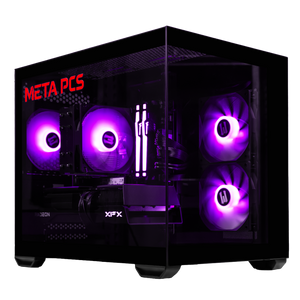
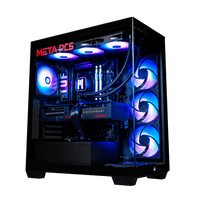
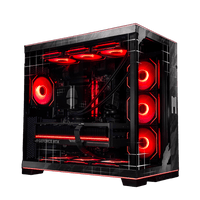






The best gaming PC under $2,000 in 2026 for most people is one with a 16GB graphics card, since that's the VRAM floor for 1440p. At META PCs that's SHADEv3 at $1,999. DOZERv2 has a faster GPU for SteamOS players, and BREACH costs $100 less for 1080p esports.
In the shop, $2,000 is where a lot of customers land once they price out a proper 1440p setup, and it's the tier where one part choice changes the whole machine. The Steam Hardware Survey for October 2026 still has 1080p as the most common primary resolution at 50.23%, with 1440p at 21.82%. So the right build depends on which of those monitors sits on your desk. All three builds below run 16GB of DDR5, a 1TB or bigger NVMe drive and a 650W power supply. The graphics card is where they split, and it decides which one you should buy. Prices are regular prices as of November 8, 2026, and all three were on sale for $200 less when we checked.
Our Builds Between $1,500 and $2,000
| Build (regular price) | Key specs | Best for |
|---|---|---|
| SHADEv3 ($1,999) | Ryzen 5 9600X, RX 9060 XT 16GB, 16GB DDR5-5600, 1TB NVMe, 240mm AIO, Windows 11 Home | 1440p AAA gaming on Windows |
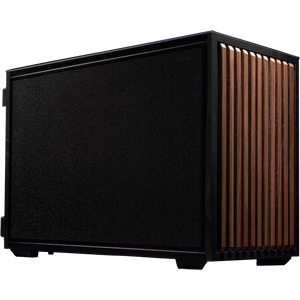
| DOZERv2 ($1,999) | Ryzen 5 9600X, RX 9070 GRE 12GB, 16GB DDR5-5600, 2TB NVMe, 240mm AIO, SteamOS | High-refresh 1080p and 1440p on a Steam library |
| BREACH ($1,899) | Core Ultra 5 250K Plus, RTX 5060 Ti 8GB, 16GB DDR5-5600, 1TB NVMe, Windows 11 Home | 1080p esports and competitive shooters |
You can see all of them side by side in our under-$2,000 collection.
The Pick for Most People: SHADEv3
SHADEv3 is the one we'd point most people to, and the reason is the 16GB on its RX 9060 XT. Our VRAM guide puts 16GB as the floor for 1440p, and SHADEv3 is the only build in this tier that clears it. That matters more every year. Texture packs keep growing, and a card that runs out of VRAM stutters no matter how fast its core is.
The rest of the build is set up to last. The Ryzen 5 9600X sits on AM5, which AMD has committed to supporting through 2029, so a CPU upgrade a few years from now can drop into the same ASUS B650M-PLUS WiFi board. A 240mm AIO keeps it cool under long sessions. Windows 11 Home comes installed, which means Game Pass works and anti-cheat shooters like Valorant and Call of Duty run the way they're supposed to.
The tradeoff is raw speed. The RX 9060 XT sits a step below the GPU in DOZERv2, so in the heaviest ray-traced games at 1440p you'll lean on FSR to keep frame rates high. For a 1440p monitor and a mix of single-player and multiplayer games, it's the safest $2,000 you can spend with us.
The Fastest Graphics Card Here: DOZERv2
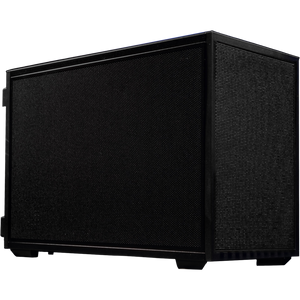
DOZERv2 has the fastest graphics card we sell under $2,000, the RX 9070 GRE. Tom's Hardware's review says the card is meant to fill the gap between the RX 9060 XT 16GB and the RX 9070, and calls it a "reasonably attainable path to high-refresh-rate 1080p and 1440p raster performance." DOZERv2 also doubles the storage of the other two with a 2TB NVMe drive, and the wood-accented Lian Li B4 case gives it a look nothing else in the tier has.
Two things to know before you buy it. First, the GRE has 12GB of VRAM. Tom's found that 12GB "sometimes hampers perf, especially with RT at 1440p and beyond," which lines up with our VRAM guide's take that 12GB handles modern AAA at 1080p and lighter 1440p. If you play with ray tracing off and chase frame rate, the GRE is the faster card. If you want ray tracing at 1440p, SHADEv3's 16GB will age better.
Second, DOZERv2 ships with SteamOS. Our SteamOS vs Windows 11 breakdown covers the details, and the big one is anti-cheat. Fortnite, Valorant, Call of Duty, Battlefield 6 and Destiny 2 use kernel-level anti-cheat that doesn't work under Proton, so they won't run. Xbox Game Pass is out too. If your library lives on Steam and you mostly play single-player games, SteamOS boots straight into Big Picture and feels like a console with a much bigger game library. If you play any of those shooters, go with SHADEv3.
For Competitive 1080p Players: BREACH
BREACH is the Intel and NVIDIA build in this tier, at $1,899. It pairs the Core Ultra 5 250K Plus with an RTX 5060 Ti 8GB. Tom's Hardware's review found the 250K Plus "matches the Ryzen 5 9600X in gaming" and said there isn't another CPU "even remotely close as far as gaming value goes." It has 18 cores (6 performance cores and 12 efficient cores), which gives it room to spare if you keep Discord and a browser open while you play.
The RTX 5060 Ti brings DLSS 4 and NVIDIA Reflex. Reflex is the one competitive players care about, since it cuts system latency in supported shooters like Valorant and Fortnite. On a 240Hz 1080p monitor, that's the setup BREACH was built for.
The catch is 8GB of VRAM. Our VRAM guide says 8GB still works at 1080p for esports and older games, and that's exactly where BREACH fits. Modern AAA at high settings, or anything at 1440p, will run short on 8GB. If your library is mostly big single-player games, the extra $100 for SHADEv3 is the best money you'll spend in this tier.
16GB of RAM in a $2,000 Gaming PC
All three builds ship with 16GB of DDR5-5600, and that's a deliberate call. Memory prices have climbed hard in 2026 (our RAMageddon buying guide covers why), and 32GB in every build would push all three past $2,000.
For gaming alone, 16GB holds up. Our RAM sizing guide found esports titles stay under 12 to 13GB, and Windows 11 itself sits around 4 to 5GB at idle. The heaviest Unreal Engine 5 games are the exception, since titles like Black Myth: Wukong and Stalker 2 can pull 16GB or more on their own at higher settings. If you stream with OBS while you play, or you run those UE5 games on high, plan on 32GB. You can spec it from the start in the custom PC builder.
If $2,000 Is a Stretch, or You're Thinking of Waiting
If $2,000 is a stretch, our best gaming PC under $1,500 guide covers the cheaper builds, including CYCLONE, DEEPCORE and EMBER Ti. Those are the right call for 1080p on a tighter budget, and the money you save covers a good monitor.
If you're thinking about holding out for a faster card, NVIDIA's next generation isn't close. Our RTX 60 series breakdown covers why leaks point to 2028, and our GPU buying guide walks through what's worth buying in the meantime. A $2,000 build bought today is going to be your main PC for a while, so pick the VRAM you'll want in three years.
FAQ
What is the best gaming PC under $2,000 in 2026?
For most people it's a build with a 16GB graphics card and Windows, since that covers 1440p and every major game launcher. At META PCs that's SHADEv3, with a Ryzen 5 9600X, an RX 9060 XT 16GB and an AM5 board supported through 2029.
Can a $2,000 gaming PC run games at 1440p?
A $2,000 PC handles 1440p well when its graphics card has 16GB of VRAM. Cards with 12GB do fine at 1440p with ray tracing off, and 8GB cards are better kept at 1080p.
Is 8GB of VRAM enough in a $2,000 gaming PC?
It's enough for 1080p esports like Valorant, CS2 and Fortnite, which is what BREACH is built for. For modern AAA games at high settings or any 1440p play, you'll want 12GB at minimum and 16GB ideally.
Should I get SteamOS or Windows on a $2,000 gaming PC?
Get Windows if you play games with kernel-level anti-cheat, like Valorant, Call of Duty or Fortnite, or if you use Game Pass. SteamOS makes sense if your library is on Steam and you mostly play single-player games.
Should I buy a $2,000 gaming PC now or wait?
Memory makers have warned that supply stays tight for years, and NVIDIA's next GPU generation is likely years out. Waiting is unlikely to get you a cheaper or faster PC soon. Our RAMageddon buying guide goes through the numbers.
Ready to Build
Every META PCs build on our ready-to-ship page ships tested and on lifetime US-based support, and we ship nationwide from our Arizona shop. If you'd rather choose every part yourself, the custom PC builder lets you spec the whole machine, and we build and test it here.