




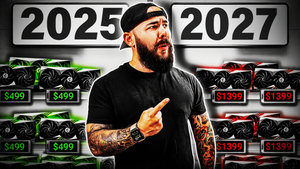
Every builder is asking the same question right now: buy now, or wait for 2027 when things maybe calm down?
Here's the honest answer from a company that builds these for a living. Prices are not calming down anytime soon, and there is nothing on the horizon that flips this back to 2025 pricing. If you need a gaming PC next year, buy now. If your current PC still runs everything, keep it running as long as you can. There is no third option where you save money by waiting.
Here's why.
What's actually happening with RAMageddon
AI data centers are eating all the memory manufacturers can produce, and PC parts are getting squeezed.
Samsung, SK Hynix, and Micron together produce over 90% of the world's DRAM. All three are diverting production toward HBM (high-bandwidth memory) that goes into AI accelerators, which sell for $30,000 to $40,000 apiece to buyers like NVIDIA, Meta, and Microsoft. When they shift wafer capacity toward AI memory, less is left for the DDR5 in your gaming PC. Less supply, same demand, prices spike.
How much? Consumer DRAM contract prices surged as much as 89% in a single quarter of 2026 according to SigmaIntel. Gartner projected DRAM prices could rise 130% year-over-year for the full year. NAND flash, which is what SSDs are made of, rose 55 to 60% in Q1 2026 as well.
The graphics card side got hit differently. NVIDIA shelved its entire 2026 gaming lineup with no RTX 50 Super refresh and no RTX 60 series. The RTX 60 got pushed back to at least 2028, according to reporting from The Information and follow-ups by Tom's Hardware and Videocardz. That is the first year in roughly three decades without a new NVIDIA gaming graphics card release.
The reason again is memory. NVIDIA can't get enough HBM for AI accelerators, so they are prioritizing datacenter chips over gaming GPUs. Gaming was about 46% of NVIDIA's revenue in fiscal 2022 (the year GeForce RTX 30-series peaked). It's now under 8%. When the choice is a $2,000 gaming card or a $30,000 AI chip using the same memory, the AI chip wins.
Zack called this back in November 2025 in Why You Should Buy a GPU NOW, months before the shortage hit consumers hard. His prediction that 2026 would be a bloodbath for GPU pricing turned out accurate. If anything, conservative.
How much prices have already moved
Concrete numbers help here. A 32GB DDR5-6000 kit that sold for $80 to $120 in mid-2025 now runs $400 to $470. Tom's Hardware's price tracker has the current floor around $375 as of late July 2026. A 64GB DDR5 kit is $875 and the stock is thin.
DDR4 hasn't escaped either. Manufacturers are phasing it out to focus what little capacity they have on newer standards, so 32GB DDR4 kits that used to run $60 to $90 in late 2025 now sit around $150 to $180.
For graphics cards, the RTX 5090 is still selling well above MSRP because supply is constrained. RTX 5080 and 5070 Ti cards see similar markups when they're in stock. AMD Radeon RX 9000 series is holding steadier, though AMD has notified board partners about a second price hike of at least 10% coming across their product line.
If you priced out a build in mid-2025, the same parts list costs roughly 40 to 60% more today. It is not done climbing.
When it gets better (spoiler: not soon)
Not to 2025 levels, and not for a while.
SK Hynix has publicly warned that manufacturing constraints will persist through 2030. Analyst consensus is that consumer memory pricing improves slightly in 2027 but stays well above pre-shortage numbers through 2028. Both timelines assume AI demand slows or new fab capacity comes online, and neither is likely in the next 12 months.
On the graphics card side, NVIDIA's RTX 60 series is now targeted for late 2027 at the earliest per Tom's Hardware reporting, with some outlets like Gagadget and XDA Developers suggesting 2028 or even 2029. Whenever it lands, it launches into whatever memory market exists at that point, which probably means higher MSRPs than the RTX 50 series.
AMD and Intel could gain ground during this gap, but neither has the manufacturing capacity to fill NVIDIA's vacated space in the high end. Realistic expectation: the RTX 5000 series stays the current high-end lineup through 2027, and pricing on those cards stays elevated because supply is limited.
Anyone telling you prices will drop back to 2025 levels is guessing.
So what should you actually do?
There are really two answers here, and one caveat.
If you need a gaming PC in the next 12 months, buy now
Prices climbed roughly 40 to 60% between mid-2025 and now, and every analyst expects them to keep climbing through 2027. Waiting 6 to 12 months will probably cost you another 15 to 25% on top of today's prices.
The "wait for the next generation" logic doesn't apply this cycle because there is no next generation from NVIDIA in 2026, and the memory side isn't tied to a product refresh cycle anyway. You're not waiting for something better. You're waiting for something more expensive.
If your current PC still runs what you play, keep it
Nothing about this market rewards you upgrading before you actually need to. Squeeze what you can out of your current build. If a component fails, replace just that component rather than doing a full rebuild. And if you're on an older platform like DDR4 and AM4, hold onto it as long as possible, because replacing the platform now is significantly more expensive than it was a year ago.
The caveat: don't buy speculatively
Grabbing components for a future upgrade "before prices go up" sounds smart in theory. In practice, you're not saving money, you're just spending it earlier. And if the component sits unused for six months, you've tied up cash for no benefit. Buy what you'll actually use in the next 90 days.
What to look for if you're buying now
Two things matter more than usual: get the specs you actually want the first time, and buy a machine with room to upgrade later without swapping the whole platform.
On specs, buy 32GB of RAM if you're on a mid-range build, 64GB if you're doing content creation. Upgrading RAM later means paying tomorrow's prices, which will be higher than today's. Same logic for storage.
On upgrade paths, AM5 is the strongest platform to buy into right now. AMD has publicly committed to supporting AM5 through 2029 and beyond, which means the CPU you buy today can be replaced by a newer Ryzen chip in a couple of years without a new motherboard or memory.
For graphics cards, RTX 5070 Ti or RTX 5080 hit the sweet spot for most builders. The 5090 is a beast, though you pay a large premium for that top tier. AMD Radeon RX 9070 XT is a strong 1440p alternative to the 5070 Ti if you don't need CUDA. As for DLSS, FSR 4 has closed most of the upscaling quality gap with DLSS, but DLSS still covers more games (especially older titles) and offers higher frame-gen multipliers.
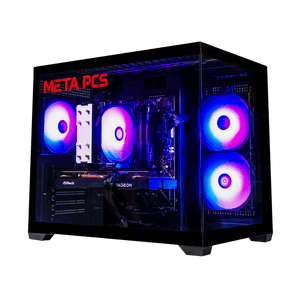
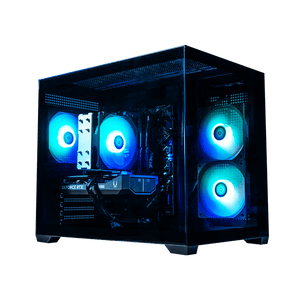
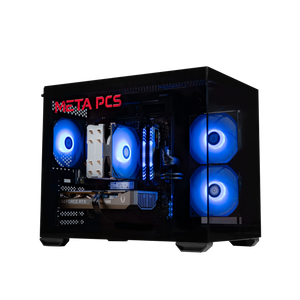
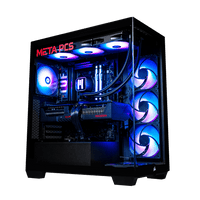
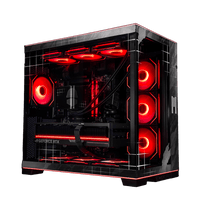
If you'd rather not source parts and negotiate this market yourself, that is what we do every day. Our Night Reaper build guide shows what a fully-configured system looks like at target specs, and our custom PC builder locks in your spec at current prices before the next round of increases lands.
Once you have the machine, here are the first six things to do before you launch a game.
FAQ
Will PC prices come back down in 2027?
Not to 2025 levels. Analyst consensus is that consumer memory pricing improves slightly in 2027 but stays well above pre-shortage numbers through 2028. SK Hynix has publicly warned constraints will persist through 2030.
Should I buy a used PC to avoid the price increases?
Used prices have risen alongside new prices in this market, so the savings aren't what they were. If you find a used system priced like it's still 2024, that's a genuine deal. Most sellers have already adjusted.
Is it worth waiting for the RTX 60 series?
Probably not, unless your current setup gets you through the next 2 to 3 years comfortably. Best-case launch window is late 2027, and it could slip to 2028 or 2029. Whenever it arrives, it launches into an even more expensive memory market, so pricing won't be friendly.
Should I buy DDR4 instead of DDR5 to save money?
DDR4 prices have also climbed, and manufacturers are phasing it out. New DDR4 kits are not the savings they were even a year ago. If you're building fresh, DDR5 is the correct choice.
Ready to build
Short answer: if you need a gaming PC in the next year, buy it now. Prices aren't going back down, and every month you wait costs you real money on the same parts list.
If you'd rather skip sourcing components in this market, our ready-to-ship builds arrive tested and configured. Everything is dialed in before it leaves the shop, so no memory-shortage math ends up on your plate.