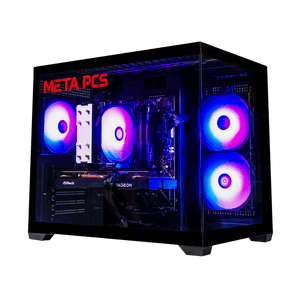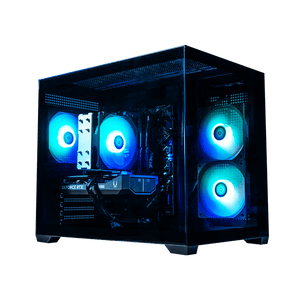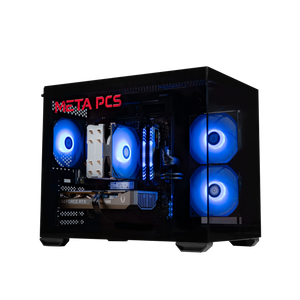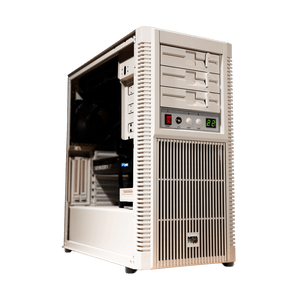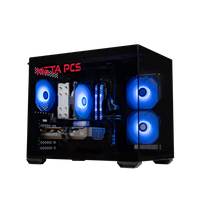
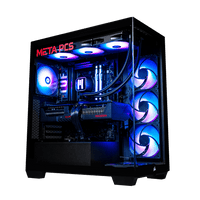
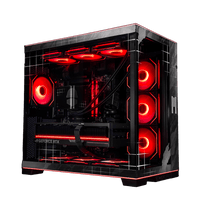





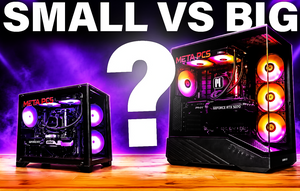
The mini PC vs full tower question used to be easy to answer: full tower for real gaming, a mini for everything else. In 2026 that split doesn't hold up. Small form factor builds now hit 186 FPS in Fortnite and clear 115 FPS in Cyberpunk 2077 at 1080p, in a footprint a fraction of the size. What changed is that small form factor grew up. A well-planned SFF build competes with full tower on performance for the use cases it's designed around.
But SFF isn't the right pick for every buyer, and pretending it is would be dishonest. It's a build type that rewards planning up front. You choose your case, your GPU, and your cooling with more intention than an ATX build requires, and if you get the plan right, you get real full-tower performance in a compact footprint. If you'd rather not do that planning, or your use case pushes past what SFF can comfortably handle, full tower is still the right call. Here's the honest breakdown, from the shop's perspective.
Quick reference: mini-ITX vs full tower in 2026
| Category | Mini-ITX / SFF | Full Tower |
|---|---|---|
| Best for | 1080p, 1440p, and 4K in well-planned builds | Any resolution, any build without planning constraints |
| GPU size range | Case-dependent (compact cases at 250mm, 18L+ cases fit 330mm+ full-size cards) | Any GPU, no size constraints |
| Cooling headroom | Case-dependent (240mm AIO in most, some fit 360mm) | Wide (360mm AIOs, high-end air coolers, no constraints) |
| Platform longevity | Same as socket lifecycle | Same as socket lifecycle |
| Portability | Sits on your desk, fits in a backpack | Usually floor-standing, too big for most desks |
| Cost at similar performance | Roughly similar, sometimes higher (mini-ITX motherboards and SFX PSUs cost more than ATX equivalents) | Standard ATX pricing |
| Upgrade complexity | Higher (compatibility tight, careful planning) | Lower (drop in and go) |
What actually changed for SFF in 2026
Two things happened in the last couple of years that shifted the mini-ITX vs full tower conversation. The first is that low-profile GPUs got legitimately capable. Cards like the ASUS RTX 5060 LP BRK at 175mm long give you a modern 50-series GPU in cases where a full-size card would be tight or impossible. This does not mean SFF now requires low-profile cards. Many 18L+ SFF cases fit full-size GPUs up to 330mm just fine. What low-profile options give you is wider case selection, so if you want to go smaller than 18L, you now have real GPU choices there too.
The second is that the gaming performance most people want now comes from chips that are far easier to cool than the flagships of a couple years ago. In a small case, heat is the constraint that decides what you can run, not price, and modern parts stay efficient enough to keep that in check. That's a real shift from two years ago, and it's what makes building small a deliberate choice now rather than a compromise.
The tradeoff has moved rather than disappeared. Where SFF used to cost you performance, now it mostly costs you planning. It asks you to plan the build around your GPU, cooling, and PSU choices in a way ATX does not. Get that planning right and SFF matches full tower. If you'd rather not think that hard about it, full tower is the safer buy.
When mini-ITX actually works
SFF is the smarter pick in a few specific situations.
You're willing to plan the build around a specific GPU and case combination. This is the real prerequisite for SFF. If you know your case, you know your GPU size ceiling, and you can match your PSU and cooling to that. When the plan is right, SFF delivers the same performance as full tower. When it isn't, you're returning parts. Full tower forgives that kind of planning laziness in a way SFF simply doesn't.
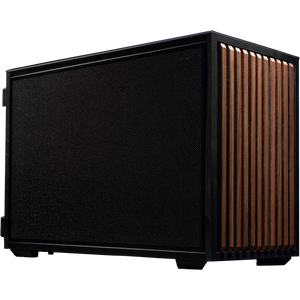
You want a PC that doesn't dominate your desk. The Cooler Master NR200 in Zack's build is 18 liters. Some cases go smaller, with the 5L to 15L range being a real category now. Either way, a mini-ITX build takes up a fraction of the desk space of a full tower. If your setup is already tight or you value a clean workstation aesthetic, SFF gets you there in a way no full tower can match.
Portability matters to you. A typical mini-ITX build weighs under 10kg and fits in a backpack. A full tower does not. If you carry your PC to a friend's place, a LAN event, or between rooms of your own house, SFF earns its keep on that alone.
When full tower is the smarter call
A few situations still point straight to full tower.
You're planning a CPU upgrade to a significantly higher-TDP chip. This is the biggest one. If you buy a Ryzen 5 9600X on AM5 today and want to move to another 9000-series chip in a similar TDP class in a couple of years, SFF handles it fine. Full tower earns its cooling headroom when you plan to jump to a much higher-TDP part, like a high-end X3D or a workstation-class chip that runs much hotter than your original build was cooled for. A like-for-like swap in the same TDP class works in SFF without drama.
You game at 4K native and want sustained performance under load. SFF can fit full-size RTX 5070 Ti and above cards in the right case, but a compact case runs the GPU hotter than a full tower does with the same card, a thermal tradeoff Gamers Nexus has documented in ITX case testing. That affects boost clock consistency under sustained load in AAA titles. For sustained 4K where you want the card holding its highest clocks for hours at a time, full tower gives you cooling headroom SFF can't match at the same price point.
You need multiple expansion cards or heavy PCIe use. Mini-ITX motherboards give you one PCIe slot for the GPU and that's usually it. RGB ecosystems, capture cards, sound cards, secondary NVMe drives on PCIe expansion, and similar accessories don't fit. Full ATX boards give you multiple PCIe slots and more M.2 mounting positions, which matters if your workflow involves anything beyond gaming.
What Zack's mini-ITX build actually shows
The build Zack put together in the video is a reference point for what SFF can do in 2026 when the plan is right. Intel Core Ultra 5 250K Plus for $200, ASUS ROG Strix B860-I motherboard, 32GB Kingston Fury DDR5-6000, ASUS RTX 5060 LP BRK, 2TB Kingston NV3 Gen 4 SSD, all wrapped up in the Cooler Master NR200 with a 240mm AIO and 850W PSU. The whole system fits in a case that's two shoe boxes tall.
Performance is not a compromise here. Cyberpunk hits 115 FPS at 1080p, Fortnite hits 186, Arc Raiders sits at 122, and Marvel Rivals lands around 88. Thermals stay comfortable across every game tested, with the GPU averaging 61 to 71 degrees and the CPU averaging 55 to 64 during gaming. Under full OCCT stress testing, the CPU peaks at 92 degrees, which is normal for a synthetic load and nothing you'd see in real gaming.
For the use cases this build targets, SFF matches full tower on both framerate and thermals. The catch is that getting there is the actual work of building small. When the plan matches the components, you get full-tower results in a fraction of the space.
What we ship at the shop for both paths
If you want a mini-ITX build built and tested by us instead of DIY, our Small Form Factor configurator lets you spec out a compact system with modern components. Starting configurations begin around $2,042 and go up from there depending on the CPU, GPU, and case you pick. The SFF path is fully custom, so you can match Zack's video build spec or go a different direction depending on what you're after.
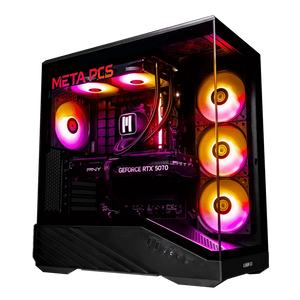
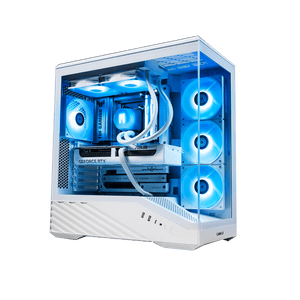
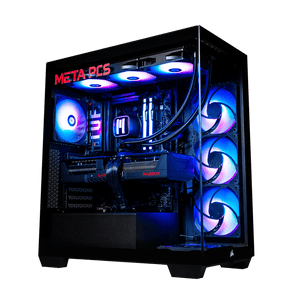
If full tower is the right call for you, our ready-to-ship builds cover the range from entry $1,299 to flagship 4K configurations. The Steamroller v4 at $1,299 is the entry AM5 pick for buyers who want 1080p high-settings gaming with room to upgrade later, and the higher-tier builds cover 1440p and 4K. If you'd rather dial in an exact full-tower spec, our custom PC builder lets you pick every component.
Either path uses standard components that upgrade cleanly over time, which matters more than usual with where memory and GPU prices sit in 2026. Both come backed by lifetime US-based support. If you want the full breakdown of what to look for in a prebuilt regardless of size, our Best Prebuilt Gaming PC guide covers the specifics.
FAQ
Is a mini ITX PC worth it for gaming in 2026?
Yes, if you're willing to plan the build around your case, GPU, and cooling choices. SFF in 2026 can match full tower performance for the use cases it's designed around, from 1080p to 4K in well-planned builds. Where it stops making sense is if you'd rather not do that planning, or if you're likely to want expansion cards or a much higher-TDP CPU upgrade down the road.
What is the best mini ITX case for gaming?
The Cooler Master NR200 at around $80 is the most builder-friendly option at the 18L size, and it supports full-size GPUs up to 330mm. Below it, cases in the 5L to 15L range give you a more compact build but ask for tighter component planning and often limit GPU size. For most buyers, the NR200 is the sweet spot between small footprint and ease of building.
Can a mini ITX PC run 4K games?
Yes, in the right build. SFF cases in the 18L+ range fit full-size RTX 5070 Ti or higher GPUs that handle 4K gaming well. The tradeoff is cooling, since a compact case runs the GPU hotter than a full tower would with the same card, which affects boost clock consistency under sustained load. If 4K is your target and you want the most consistent performance possible, full tower is the safer call. If you're okay planning around thermal constraints, SFF can hit 4K in the right configuration.
Do mini PCs overheat during gaming?
Not with proper case design. The Cooler Master NR200 with its five ventilated panels handles modern gaming components fine. In our shop testing, similarly configured SFF builds run GPU temps in the 60 to 75 degree range under gaming loads and CPU temps in the mid 60s. Thermal issues in SFF usually come from case designs with poor airflow, not from small case sizes in general.
Ready to build
Mini-ITX in 2026 is a real gaming platform that matches full tower performance when the build is planned well. Full tower is still the smarter call when you don't want to do that planning, when you're targeting sustained 4K with maximum consistency, when you need expansion cards, or when you're planning a significant CPU upgrade to a higher-TDP class chip. Either way, it comes down to matching the build to what you actually plan to do with it.
If you want a custom SFF build spec'd and shipped, our SFF configurator covers that path. If full tower fits you better, our ready-to-ship builds cover the full range from entry to flagship, and every system ships assembled, tested, and backed by lifetime US-based support.